While the 2025/26 Uganda Premier League campaign delivered memorable football moments, it also exposed some of the deepest structural problems facing the domestic game.
Beyond the goals and title battles, the season was marred by financial turmoil, administrative dysfunction and a controversial league format experiment that threatened to divide the football fraternity.
Financial woes continue to haunt clubs
One of the most troubling themes of the season was the persistent financial distress affecting several top-flight clubs.
Across the league, delayed wages and salary arrears remained a recurring issue, leaving players and technical staff frustrated as clubs struggled to meet their obligations.
The crisis was particularly evident at Mbarara City, where reports emerged of players abandoning camp due to unpaid dues. In one extraordinary incident during a match against Lugazi FC, striker Clinton Kamugisha was deployed as a goalkeeper because of personnel shortages.
Karim Watambala crowned Uganda Premier League’s MVP after stellar season
At Express FC, head coach Jimmy Kintu publicly disclosed that members of his squad had gone for months without receiving their salaries. Similar complaints surfaced from within Calvary FC and several other clubs as financial uncertainty continued to cast a shadow over the competition.
However, few clubs symbolized the disorder more than newly promoted Buhimba United Saints.
The club spent much of the campaign battling internal leadership disputes that frequently disrupted operations. Logistical breakdowns became commonplace, with the team arriving late for fixtures against Express FC and Mbarara City. Matters eventually deteriorated further when players staged a strike before refusing to travel for a league match against NEC FC at Lugogo.
Ugandan football has witnessed ugly scenes before — including Arua Hill once fielding only seven players in a league game — but Buhimba‘s failure to honour a fixture will be remembered as one of the most embarrassing episodes of the season.
League format that nearly tore the game apart
If there was one issue that dominated boardroom discussions and football debates throughout the season, it was FUFA’s controversial attempt to overhaul the Uganda Premier League structure.
The federation introduced a new three-phase competition model ahead of the campaign, presenting it as a progressive step designed to boost competitiveness, increase commercial appeal and generate more revenue.
Karim Watambala reveals Vipers’ ruthless winning mentality after title triumph
Under the proposal, the 16 participating clubs would first complete a single round of fixtures before splitting into separate championship and relegation sections for the remainder of the season.
FUFA aggressively promoted the concept, highlighting the prospect of bigger prize money and a more exciting title race. Yet the proposal immediately encountered stiff opposition from several clubs.
Among the most vocal critics was Vipers SC, who questioned the integrity of the format, the scheduling implications and the manner in which the proposal had been introduced.
What followed was months of tense negotiations and heated exchanges. Stakeholder meetings, including high-profile discussions held at Serena Hotel, often ended without consensus as divisions within the game became increasingly apparent.
Although a number of clubs publicly endorsed the plan, many privately expressed reservations, insisting they had been pressured into supporting the changes.
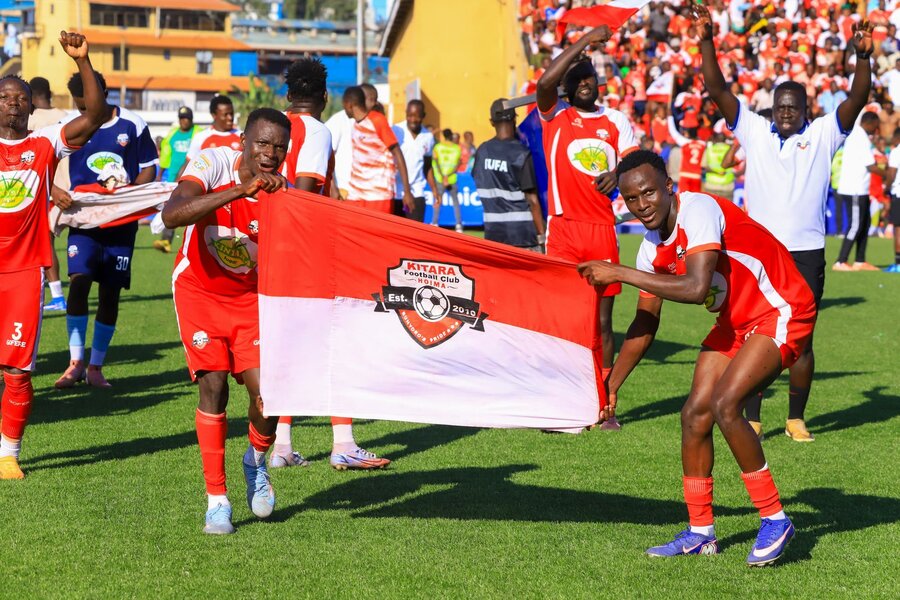
The dispute reached its peak when Vipers declined to honour a planned double-header fixture against Kitara FC at Mandela National Stadium, Namboole, plunging the matter into a full-blown crisis.
Faced with mounting resistance, FUFA eventually abandoned the project. Federation president Moses Magogo later announced a return to the traditional league format, explaining that FUFA had “listened to the clubs and other stakeholders.”
Fans back Magogo’s community-first funding model, urges fair play in UPL race
The reversal marked a significant climbdown for the federation and brought an end to one of the most contentious governance battles Ugandan football has witnessed in recent years.
For many observers, no issue during the 2025/26 season damaged confidence in the league’s administration more than the format saga, a controversy that tested relationships across the game and raised serious questions about decision-making at the highest level.