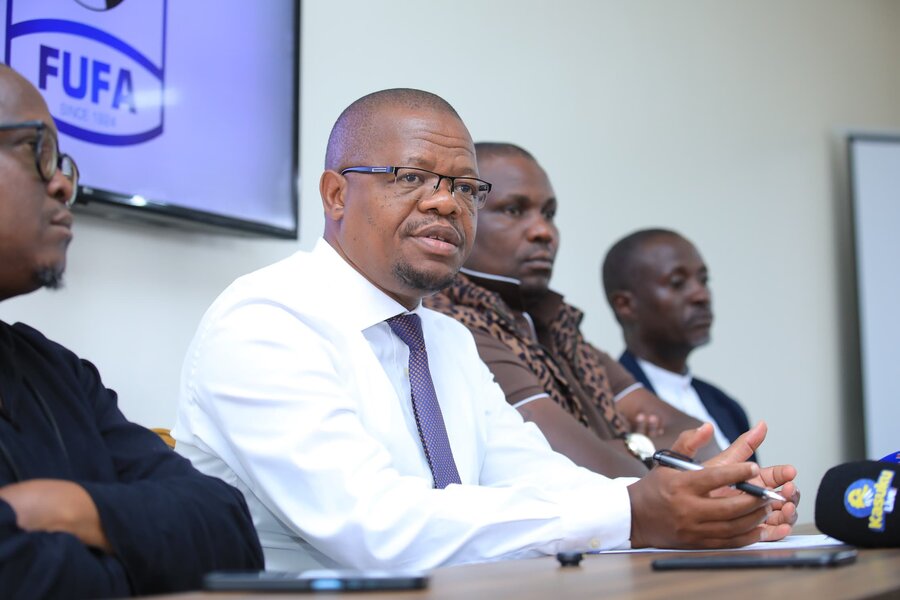
Five months into his fresh mandate as FUFA President, Moses Magogo has signaled that he wants Ugandan football to think bigger, act bolder, and position itself beyond regional boundaries. The Pamoja Bid alone is proof that he is no longer content with small ambitions.
But as FUFA prepares to unveil more than twenty committees that will shape the federation’s next four years, there is one sector that demands immediate, uncompromising attention: the Referees’ Standing Committee, the institution responsible for maintaining order, integrity, and credibility in the game.
System that has been crying for help
Ugandan refereeing has limped through a turbulent period. Under the previous FRSC leadership of Ronnie Kalema, the department became the epicentre of controversy. More than 30 referees found themselves suspended or banned. Allegations of match-fixing swirled endlessly. Although none of these accusations were conclusively proven, the damage to public trust was devastating.
Kalema’s subsequent reassignment to Football Development didn’t soothe concerns, it only deepened the unease.
To restore confidence, FUFA turned to former FIFA referee Brian Miiro Nsubuga to chair the new committee. His appointment raised hopes, but the deeper fractures in the refereeing system have not healed. Referees still encounter arbitrary punishments. Some go months without consistent match pay. Their retirement prospects are bleak. And perhaps most concerning, several committee members still operate without the independence required to make firm, unbiased decisions.
FUFA bows to pressure, suspends controversial Uganda Premier League reforms
Why the old model is no longer enough
FIFA’s long-standing guidance that ex-elite referees should lead national committees is sensible, but Uganda’s experience shows that it isn’t always enough. Internal politics, favouritism, and the fear of offending powerful stakeholders often limit the effectiveness of even the most competent local leaders.
Some of Africa’s strongest refereeing nations, Egypt and Morocco prime among them, have adopted a different strategy: placing neutral foreign experts at the centre of refereeing structures. The results have been striking. Appointments have become cleaner. Assessments more credible. Political interference drastically reduced.
Uganda can learn from this.
Case for bringing in a neutral foreign expert
Picture a system where a seasoned, internationally respected referee expert, someone with no stake in local football politics, oversees appointments, training, assessments, and discipline. Surround this expert with a competent Ugandan team that understands the local context.
The result?
Decisions made on merit, not relationships. Objective performance reviews, not political scores. Referees who feel protected, not disposable. Clubs and fans who trust the process again. A league free from the constant hum of match-fixing rumors. This kind of structural reform doesn’t weaken local referees, it empowers them.
Make-or-Break moment for Magogo
FUFA is about to announce the committees that will steer Competitions, Finance, Legal Affairs, Development, Marketing, Match Manipulation, Licensing and more. Yet among all these critical units, the refereeing department must be treated as the beating heart.
If referees are inconsistent, the league becomes a circus. If referees feel intimidated, the competition loses credibility. If referees doubt their own protection, the entire football ecosystem collapses under its own mistrust.
Uganda cannot move forward with a refereeing system built on shaky foundations.
New Leadership. New Systems. New Culture.
This is the moment Magogo can redefine Ugandan refereeing for an entire generation. It will require bravery, the same kind of boldness he has shown in technical decisions around the Cranes. It will require transparency, accountability, and the willingness to bring in outside help if that’s what it takes to clean up the system.
Ugandan football is standing at the crossroads.
One road leads to more suspicion, more controversies, and more undermining of the league’s credibility. The other leads to a professional, trusted, world-standard refereeing structure that protects officials and strengthens the game from top to bottom.